


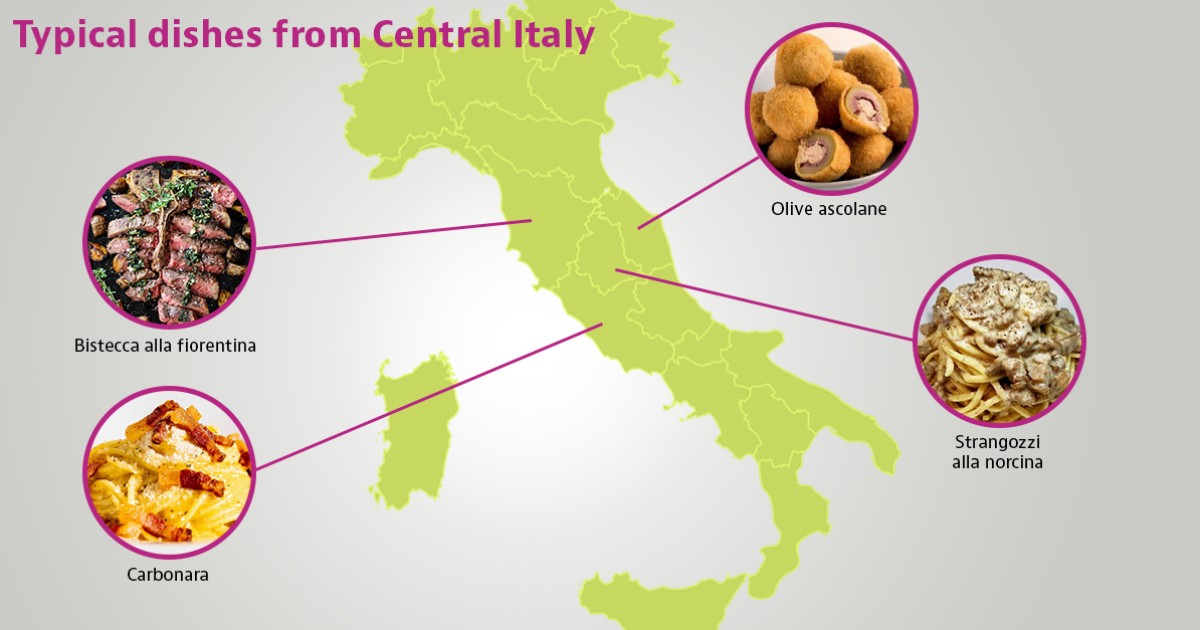

Lazio: Carbonara, the pasta dish that won over the world
Carbonara is probably Lazio’s most famous dish worldwide, yet its original preparation is still misunderstood, adapted and often stripped of its character.
The traditional recipe calls for just four main ingredients: pasta, usually rigatoni or spaghetti, cured pork cheek known as guanciale, fresh eggs — with the proportion of yolk and white varying according to the number of diners — and DOP Pecorino Romano cheese.
There is no cream, onion or garlic. Carbonara gets its creamy texture through the emulsion of egg yolks and the fat released by the browned guanciale, rather than through any added ingredients.
The dish’s history is still debated. The most widely accepted version places its origins in Rome during the first half of the 20th century, with possible influences from the cooking of charcoal workers in the Abruzzo and Lazio Apennines. Its name, carbonara, may refer to the charcoal used by the workers, who may have prepared a quick, filling, high-protein meal during long days in the woods.
Every year, between April and May, Carbonara Day brings together enthusiasts and chefs from around the world to celebrate the pasta dish and restate its fundamental rules.
Tuscany: Bistecca alla fiorentina, the ritual of fire and Chianina beef
Bistecca alla fiorentina is far more than a dish: it is a ritual. It is a serious occasion where the quality of the meat, the embers and the cook’s skill come together in something that goes well beyond an ordinary meal.
It is a T-shaped bone-in sirloin steak, or T-bone, made exclusively with cattle from the Chianina breed, native to Tuscany’s Valdichiana area. To count as authentic, it must weigh at least 600 grams, although the best-known versions are comfortably over one kilogram.
Cooking follows precise rules and leaves little room for compromise. The steak must be at least three fingers thick, cooked over hot embers for around three or four minutes on each side, then left upright on the bone for a few minutes. The result is meat served rare, with a properly seared exterior and a warm, red centre that should never turn grey.
Chianina is one of the world’s oldest cattle breeds. It appeared in Etruscan bas-reliefs and has been selectively bred over the centuries for its hardiness and meat quality. Today, production is protected by strict regulations setting out the geographical farming area and guaranteeing product traceability.
Umbria: Strangozzi alla norcina, scented with black truffle
Strangozzi are Umbria’s signature fresh pasta. They are long, irregular strands, similar to spaghetti but thicker and made without eggs, using only flour and water.
Their name suggests ancient origins and has prompted several theories. Some link it to the shoelaces worn by farm workers, while others connect it with strangolatori, or stranglers, with the pasta said to have been deliberately made sturdy.
Whatever the true origin of the name, strangozzi alla norcina is the sauce that gives the pasta its reputation. It combines pork sausage prepared in the Norcia style, Norcia black truffle and Umbrian pecorino cheese.
Norcia is regarded as the world capital of norcineria, an old craft devoted to transforming pork into cured meats, sausages and other specialities. It is even recognised by UNESCO as intangible cultural heritage.
The Marche: Olive ascolane, Ascoli Piceno’s crisp, golden speciality
Olive ascolane are perhaps the most refined fried food in Italian tradition. These are pitted green olives stuffed with a mixture of meats — veal, pork and sometimes chicken — seasoned with nutmeg and lemon zest, coated in egg and breadcrumbs, then fried until evenly golden and crisp.
They must be made with Oliva Tenera Ascolana DOP olives, a native variety grown around Ascoli Piceno and in the surrounding valleys. These are generously sized olives with plenty of flesh and a small stone, making them particularly suitable for hand-pitting.
In Ascoli Piceno, fried olives have long been the undisputed centrepiece of fritto misto all’ascolana, a mixed fried selection that also includes cremina fritta — breaded custard cream — battered salt cod and seasonal vegetables.
Stay inspired for your adventures in Italy —get our weekly newsletter for the latest travel, legal, and lifestyle news.
Source: https://www.idealista.it/