



Halloween in Italy is at its most interesting away from generic costume parties. Medieval lanes, old folklore and regional traditions around the dead bring a slightly eerie edge to late October, while the 1 and 2 November observances retain real significance for local families.
Halloween falls on Saturday 31 October 2026, with Ognissanti on Sunday 1 November and All Souls’ Day on Monday 2 November. The long weekend may mean higher transport demand and altered opening times, particularly in cities and well-established festival towns.
Borgo a Mozzano, Tuscany
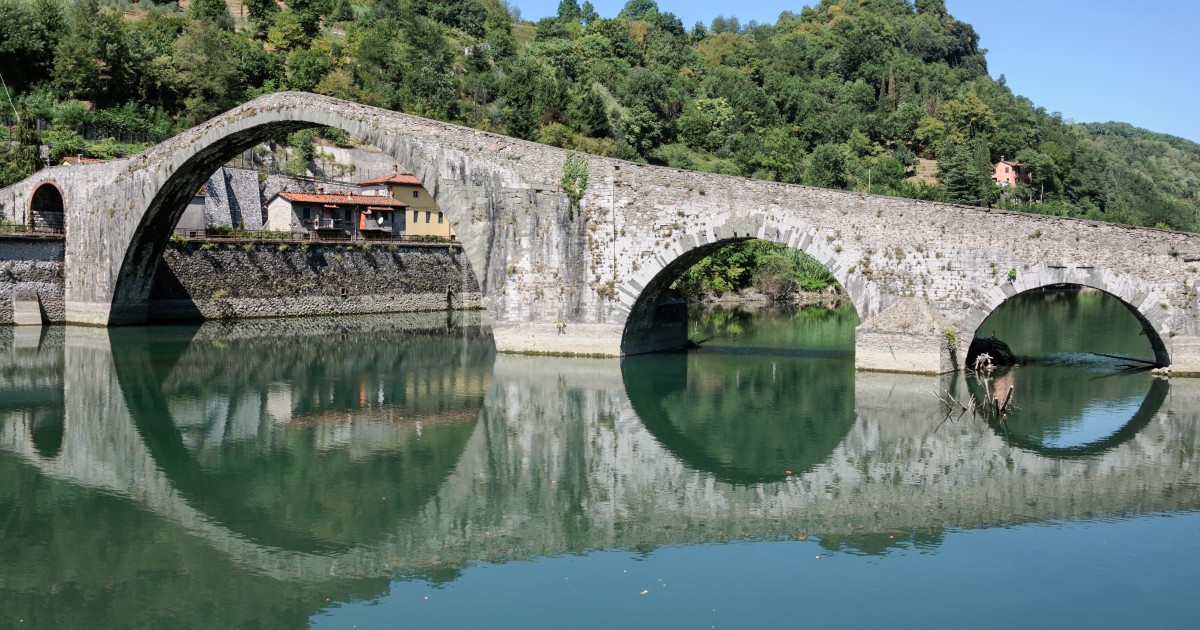
Borgo a Mozzano, north of Lucca in Tuscany’s Serchio Valley, has the sort of setting that needs very little extra staging. Its landmark is Ponte della Maddalena, often called the Devil’s Bridge, a narrow stone bridge with one dramatically high arch above the river.
A local legend claims that its builder made a bargain with the devil to finish the bridge in time, then outwitted him by sending a dog across first. The story has helped turn the bridge into a natural focus for Halloween events, costumed performances and evening entertainment in years when the town puts on a full programme.
The surrounding valley is a good choice for anyone who prefers a small-town stay to a big-city club night. Accommodation in Borgo a Mozzano and nearby Lucca can fill up early for the weekend, and transport after evening events is limited enough that driving or staying locally makes life easier.
Triora, Liguria
Perched in the Ligurian Alps behind the Riviera, Triora is widely called the paese delle streghe, or village of witches. Its reputation comes from the witch trials of 1587–89, when several local women were accused during a period of hardship, illness and poor harvests.
Triora’s narrow stone alleys, vaulted passages and hillside position still make it an excellent place to explore folklore, especially with the town’s small witchcraft museum and local legends in the mix.
Halloween programming varies by year, but late October can bring talks, markets and folklore activities. Triora is remote, with winding mountain roads and few straightforward public-transport links, so a car is generally the most practical way to get there and back.
Venice
Venice does not need plastic cobwebs to feel strange after dark. Once the crowds retreat, its quiet canals, blind alleys and echoing courtyards can feel deliciously unnerving, particularly on misty autumn evenings.
Halloween ghost walks in Venice commonly draw on stories of plague, noble families, abandoned islands and purported hauntings. The best ones tend to treat the city’s long history seriously, with tales anchored in particular palazzi, churches and lesser-visited parts of Cannaregio, Castello or Dorsoduro.
Venice is a pricier option over a holiday weekend, and 1 November can bring changes to opening hours. Mestre is the usual budget base, while staying on Giudecca or in Cannaregio can make evenings on the island feel more relaxed without being quite as hectic as the San Marco area.
Corinaldo, Marche
The walled hill town of Corinaldo, in Marche, has a knack for theatrical Halloween celebrations. Its fortified centre, long stone stairways and narrow streets provide a ready-made backdrop for Festa delle Streghe, often translated as the Night of the Witches.
In previous editions, the event has included street performers, music, visual installations, themed food stalls and activities for families. It feels playful rather than genuinely frightening, so it works particularly well for travellers with children or anyone after a sociable autumn weekend with a local flavour.
The 2026 programme should be confirmed with the local organisers, as dates and formats can shift. Corinaldo is within reach of Ancona, the Adriatic coast and other Marche hill towns, making it an easy addition to a wider regional break.
Orsara di Puglia, Apulia
For a late-autumn celebration with real local roots, Orsara di Puglia is hard to top. On the night of 1 November, the town observes Fucacoste e Cocce Priatorje, an old ritual connected with souls in purgatory and the remembrance of the dead.
Bonfires burn through streets and courtyards, while carved turnips and pumpkins are set out as symbolic faces. The unusual name is often translated as “bonfires and heads of purgatory”, which gives a fair sense of the event’s mix of solemnity, folklore and visual drama.
Orsara di Puglia is in the Daunian Mountains of northern Apulia, away from the better-trodden coastal routes. Public transport can be fiddly, so a car or a carefully planned onward journey is useful, especially after dark.
Stay inspired for your adventures in Italy —get our weekly newsletter for the latest travel, legal, and lifestyle news.
Source: https://www.idealista.it/