



Italy is one of the countries with the world’s richest cultural and natural heritage, with 62 UNESCO World Heritage Sites.
Its art cities and natural settings tell stories of centuries of history, traditions and biodiversity. Five UNESCO sites to visit in Italy have been selected here, well suited to an autumn break, a cultural weekend or early plans for a future trip.
Alberobello: the town of trulli
Have you ever seen a town made entirely of fairytale-like houses?
In Puglia, the celebrated trulli of Alberobello stand out amid sweeping scenery. These architectural masterpieces have been a UNESCO World Heritage Site since 1996.
The distinctive conical structures were originally built centuries ago as shelters for farmers and small landowners. Their remarkable sturdiness and surprisingly comfortable interiors mean many are still used as homes today.
A walk through the historic centre of Alberobello feels like stepping back in time, with hundreds of limestone trulli reflecting the history and traditions of an entire region.
The trulli have an enduring appeal, and a stay in Puglia can easily become a love-at-first-sight sort of affair.
Cinque Terre: a paradise perched above the sea
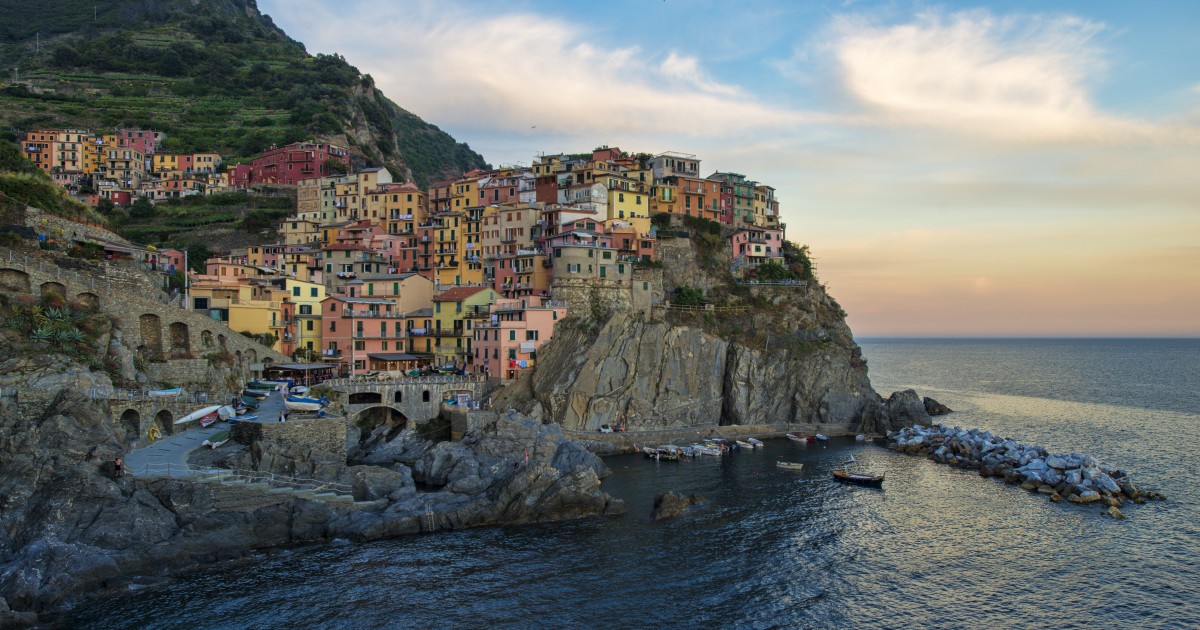
The Cinque Terre have long captured imaginations across the world. Since 1997, these remarkable villages on the Riviera di Levante have been listed as a UNESCO World Heritage Site, alongside Portovenere and the nearby small islands.
It is a place where human settlement has pushed back against the terrain, creating colourful houses balanced between the blue Ligurian Sea and steep mountainsides.
Explore the Cinque Terre National Park, walk its trails suspended between sea and sky, and take in scenery unlike anywhere else.
There is plenty to get under the skin of in the Cinque Terre, including practical details for planning a future trip.
Amalfi Coast: a sensory journey
For a picture-postcard Mediterranean setting, the Amalfi Coast fits the bill.
The coast, which includes Positano, Amalfi and Vietri sul Mare, is a UNESCO World Heritage Site thanks to its natural setting and historic and artistic treasures.
There are fine Roman villas, Vietri’s colourful domes, ancient artefacts tucked away in churches and museums, and a distinctly medieval atmosphere.
The scent of lemon groves hangs in the air, while the sea shifts through countless shades along the cliffs. Local specialities have won over travellers for generations.
The Amalfi Coast continues to leave a lasting impression on those who spend time there.
Matera: a living nativity scene
At the heart of Basilicata lies Matera, the City of the Sassi. It has been a UNESCO World Heritage Site since 1993 and was the European Capital of Culture in 2019.
The Sassi are Matera’s ancient cave districts, carved into tufa rock. Walking through them reveals a remarkable and often difficult history, also explored in the work of Carlo Levi.
Matera’s striking beauty lies in the contrast between human ingenuity and the harsh lives of the people who once lived here.
Noto: the capital of Baroque architecture
Sicily has seven UNESCO sites, including the remarkable Val di Noto, a centre of late Baroque Italian art.
Noto, along with Ragusa, Caltagirone, Scicli and other Sicilian towns, is home to monumental churches and palaces in the distinctive yellow tufa stone. Their careful harmony creates an almost theatrical setting.
South-eastern Sicily has a special atmosphere, especially in its towns rebuilt after the 1693 earthquake.
The Baroque treasures of the Val di Noto bring together art, history and a character that is unmistakably Sicilian.
Stay inspired for your adventures in Italy —get our weekly newsletter for the latest travel, legal, and lifestyle news.
Source: https://www.idealista.it/