


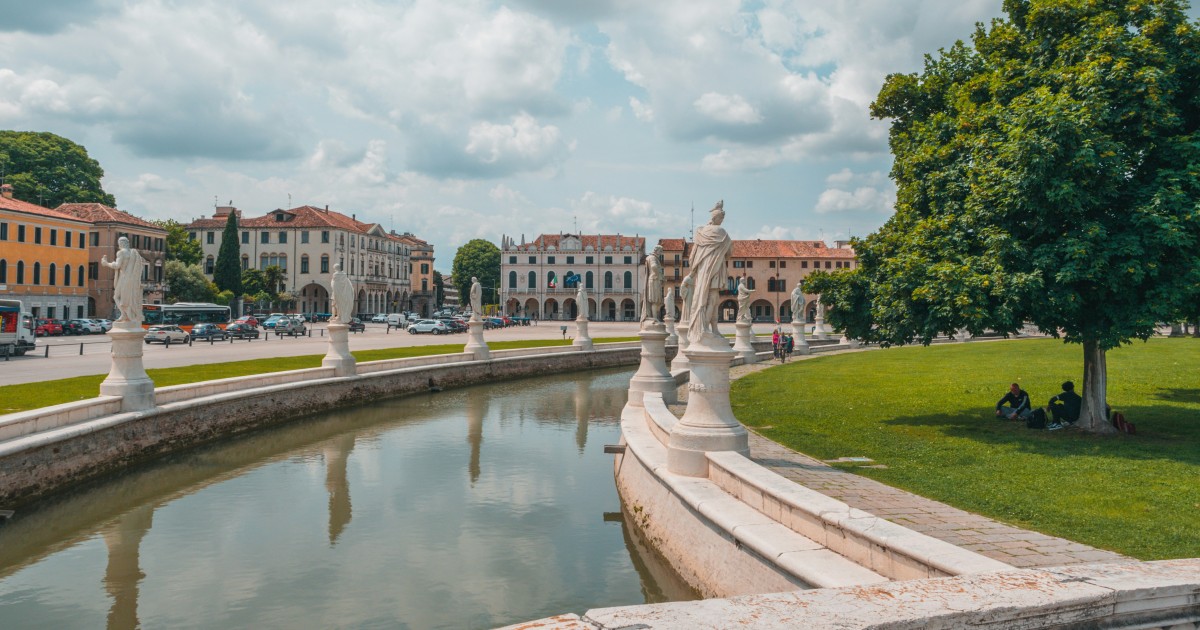

Italy has three cities in the world’s top 30 for quality of life in the 2026 Global Cities Index. It is an impressive result for northern Italy, with two cities in Veneto and all three located north of Rome.
The index benchmarks 1,000 cities across economics, human capital, quality of life, environment and governance. Each category is indexed on a scale of 0 to 100, then combined into an overall score. Italy’s cities stand out specifically in the quality-of-life category.
Three Italian cities in the global top 30 for quality of life
|
Global quality-of-life rank |
||
|---|---|---|
|
Venice |
Veneto |
20th |
|
Padua |
Veneto |
24th |
|
Genoa |
Liguria |
28th |
The result is notable because Rome and Milan, usually the first cities considered by people moving to Italy for work, study or international connections, are not among the three Italian cities listed here.
That does not make either city less appealing. It simply suggests that big-city opportunity and a strong score in a quality-of-life category are not necessarily the same thing.
Why northern Italy stands out in the quality-of-life ranking
Still, Venice, Padua and Genoa each have qualities that often matter in daily life: substantial historic centres, established urban services, cultural life and access to wider regional transport networks.
Venice and Padua benefit from Veneto’s rail connections, while Genoa has a very different setting between the Ligurian Sea and the Apennines.
The three cities offer distinct versions of northern Italian living: Venice’s lagoon setting, Padua’s more conventional city rhythm and Genoa’s working-port character.
Northern Italy also features heavily in other assessments of the best places to live in Italy for quality of life, suggesting that the region’s appeal extends beyond one global ranking.
Venice: Italy’s highest-ranked city for quality of life
Venice comes 20th globally. The historic centre is car-free, walkable and filled with museums, churches, bacari and local food markets. Outside the busiest visitor routes, neighbourhoods such as Cannaregio, Dorsoduro and Castello still have a recognisable local rhythm.
Daily life does require compromise. Tourism pressure, a limited supply of housing and lagoon logistics can make ordinary tasks less straightforward than on the mainland.
For those seeking a more conventional routine, Mestre may be worth researching thanks to its mainland location and transport connections to the islands.
Housing costs in Venice
According to idealista’s August 2026 figures, property prices in Venice averaged €4,931 per m².
- An 80 m² flat at that citywide average would cost around €394,480, before purchase taxes, professional fees or renovation work.
- Rent prices in Venice averaged €20.50 per m² in September 2026, equivalent to about €1,640 a month for 80 m².
Note that prices vary considerably between the historic centre, the islands and mainland districts, as well as by condition, floor level and views.
Padua: a practical alternative near Venice
Padua, or Padova, ranks 24th worldwide. It is often treated as a base for visiting Venice, but it has a strong identity in its own right, with a historic centre, arcaded streets, lively squares and one of Italy’s oldest universities.
The city is well placed for rail travel across Veneto and beyond, while offering the everyday services and residential districts that can make a move easier to manage. Its setting may suit students, university staff, families and remote workers who want proximity to Venice without living in a tourist-heavy lagoon city.
Housing costs in Padua
In August 2026, property prices in Padua averaged €2,614 per m², suggesting an indicative price of €209,120 for an 80 m² flat.
- Average rents were €13.80 per m² in September 2026, or approximately €1,104 a month for 80 m².
These figures place Padua at a significantly lower price point than Venice, although central areas and well-maintained homes will generally cost more than the city average.
Genoa: a top-30 city with lower housing costs
Genoa, or Genova, ranks 28th worldwide. It is a working port city with a dense historic centre, grand palazzi, a long waterfront and the Riviera within reach. The old town’s narrow caruggi are more lived-in than polished, while the city’s food scene is rooted in Ligurian staples such as focaccia, pesto and seafood.
The surrounding landscape has a major influence on day-to-day life. Genoa rises quickly from the coast into the hills, and neighbourhoods can differ sharply in access, views, building condition and atmosphere.
Housing costs in Genoa
In August 2026, property prices in Genoa averaged €1,807 per m², putting an indicative 80 m² flat at €144,560.
- Average rents came to €10.70 per m² in September 2026, or roughly €856 a month for 80 m².
Genoa had the lowest average sale and rental prices of the three cities, although homes close to the sea, near stations or in renovated historic buildings can cost considerably more.
Venice, Padua or Genoa: three different ways to live in northern Italy
|
Could suit people looking for |
||
|---|---|---|
|
Venice |
Car-free historic living, cultural life and an unmistakable setting |
The highest purchase and rental costs of the three |
|
Padua |
A well-connected Veneto city, university life and access to Venice |
A more local, less international day-to-day feel |
|
Genoa |
Coastal living, maritime character and lower average housing costs |
Hilly terrain and very different neighbourhood experiences |
The three cities share a strong ranking result but have little in common when it comes to the practicalities of a move. Venice offers its own extraordinary setting at a premium. Padua brings a more manageable Veneto base, while Genoa pairs a coastal location with the lowest housing costs in this comparison.
What the ranking means for people moving to Italy
The Oxford Economics index is a useful reason to look beyond the usual Rome-and-Milan shortlist, but it is only one part of the picture. Employment prospects, residency requirements, Italian language skills, schools, healthcare and the availability of long-term rentals will be just as important.
Venice, Padua and Genoa offer three credible but very different options for people exploring the best cities to live in Italy: a lagoon city with world-class cultural depth, a connected university city in Veneto and a characterful Ligurian port with a more accessible housing market.
Stay in the know about living in Italy as a foreigner—get our weekly newsletter for the latest travel, legal, and lifestyle news.
Source: https://www.idealista.it/