


The Parco Archeologico della Neapolis is one of the most important archaeological sites in Sicily and an essential stop for anyone exploring Syracuse (Siracusa). Spread across a remarkable landscape of ancient ruins, stone quarries and Mediterranean vegetation, the park offers a fascinating journey through the city’s Greek and Roman past.
Its highlights include the magnificent Greek Theatre, the Roman Amphitheatre, the ancient quarries known as the Latomie, and the famous Ear of Dionysius (Orecchio di Dionisio).
For history lovers, this is one of the most rewarding places to visit in southeastern Sicily.
A Journey into Ancient Syracuse
Syracuse was one of the most powerful cities of the ancient Mediterranean world. Founded by Greek settlers in the 8th century BCE, it developed into an important political, military and cultural center.
The archaeological park preserves some of the most impressive monuments from this long history.
Unlike a conventional museum, Neapolis allows visitors to walk through the landscape where ancient Syracusans gathered for performances, ceremonies and public spectacles thousands of years ago.
Allow yourself time to explore. The experience is as much about the atmosphere of the site as it is about individual monuments.
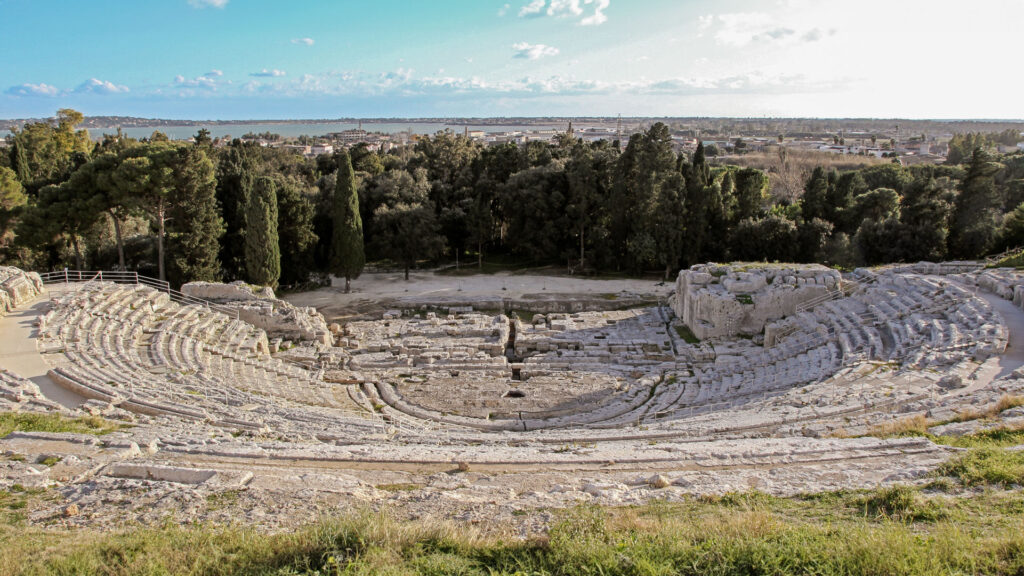
The Greek Theatre
The Teatro Greco, or Greek Theatre, is the star attraction of the archaeological park.
Carved partly into the rocky hillside, the enormous theatre reflects the importance of drama and public performance in the ancient Greek world. Its scale remains impressive even today.
Standing among the stone seating, it is easy to imagine audiences gathering here centuries ago to watch theatrical performances.
The theatre continues to play a cultural role in modern Syracuse, with classical performances traditionally staged here during the warmer months.
Its combination of history, architecture and setting makes it one of Sicily’s most memorable ancient landmarks.
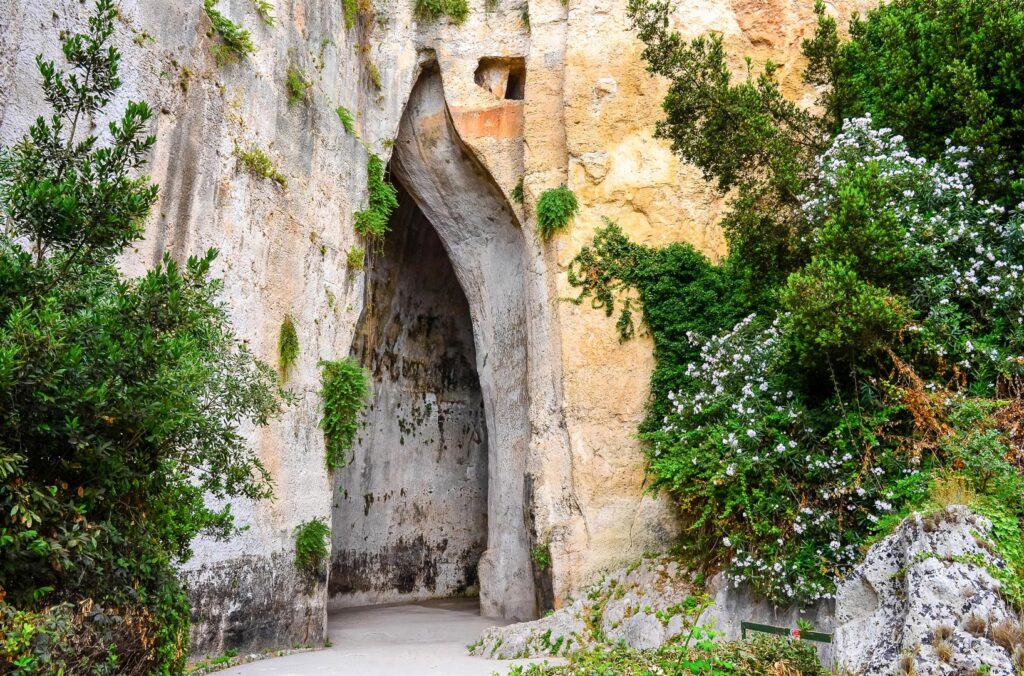
The Ear of Dionysius
Another famous sight inside the park is the Orecchio di Dionisio, or Ear of Dionysius.
This extraordinary artificial cave is located within the ancient stone quarries and is instantly recognizable for its tall, curved entrance.
The cave is particularly famous for its unusual acoustics. Sounds made inside can echo and resonate dramatically through the cavern.
Its name is traditionally associated with the painter Caravaggio and with a legend involving Dionysius I, the ancient ruler of Syracuse. According to the story, prisoners were kept inside the cave and its acoustics allowed their conversations to be overheard.
Whatever the truth behind the legend, stepping inside the cavern is one of the park’s most distinctive experiences.
Latomia del Paradiso
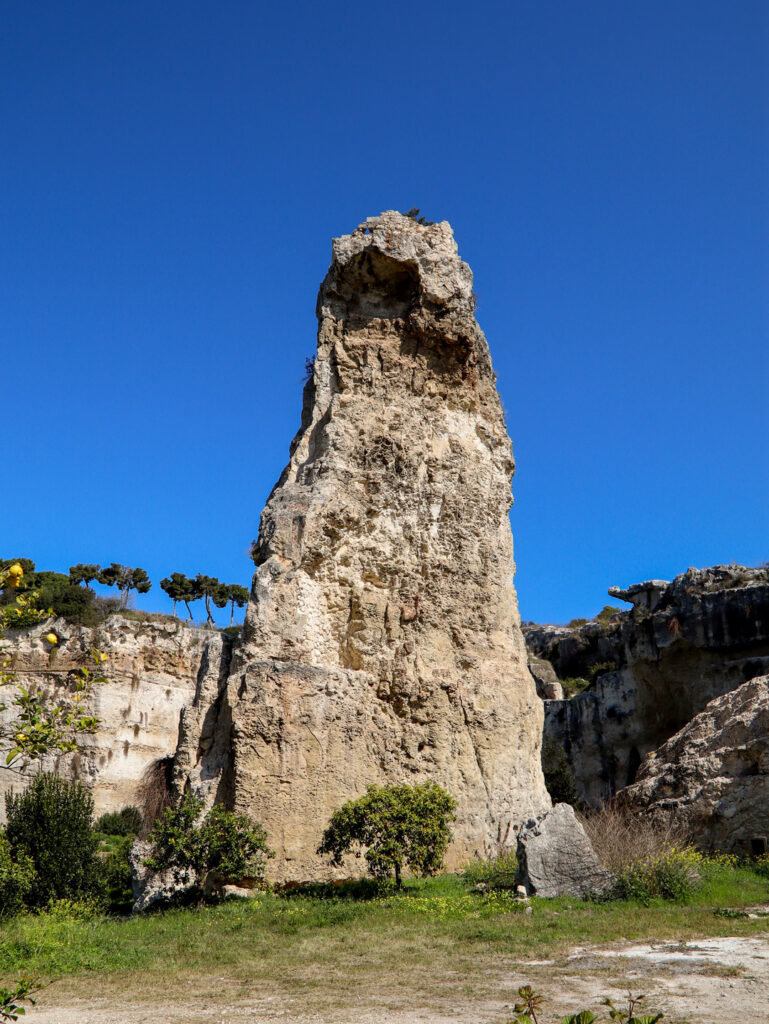
The Ear of Dionysius forms part of the Latomia del Paradiso, one of the ancient quarries from which stone was extracted for the construction of Syracuse.
Today, the area feels remarkably different from its industrial origins.
Vegetation grows among the towering rock faces, creating a green and atmospheric landscape. Walking through the quarry provides an interesting contrast to the exposed stone structures elsewhere in the archaeological park.
It is also a reminder that much of ancient Syracuse was literally built from the rock beneath the city.
Grotta dei Cordari
Within the quarry area, visitors may also encounter the Grotta dei Cordari, another large cavern associated with the site’s long history.
Its name refers to rope makers who once used the cavern for their work. The naturally humid environment was particularly suitable for producing rope.
Access to individual caves or sections of the archaeological area can vary, so check current visitor information before planning your visit.
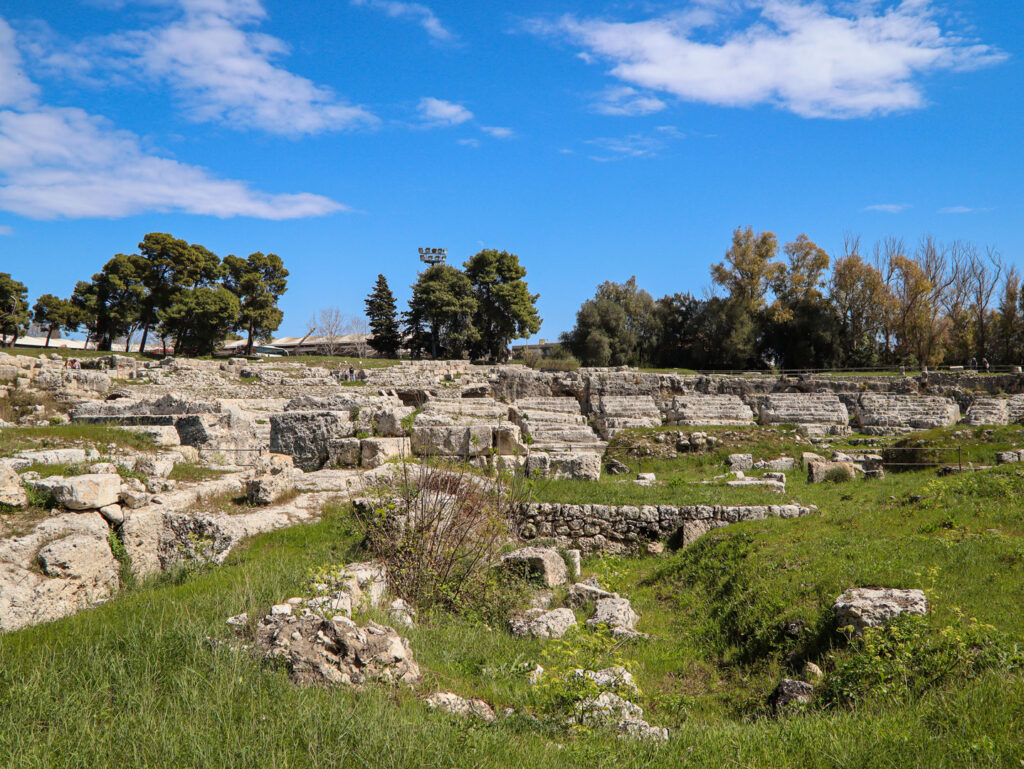
The Roman Amphitheatre
The park is not exclusively Greek.
The Anfiteatro Romano, or Roman Amphitheatre, represents a later chapter in Syracuse’s history. Built during the Roman period, the structure was used for public entertainment and spectacles.
Although parts of the amphitheatre were altered or stripped of building material over the centuries, its elliptical form remains clearly visible.
Seeing the Greek Theatre and Roman Amphitheatre during the same visit provides an interesting comparison between two major traditions of ancient public architecture.
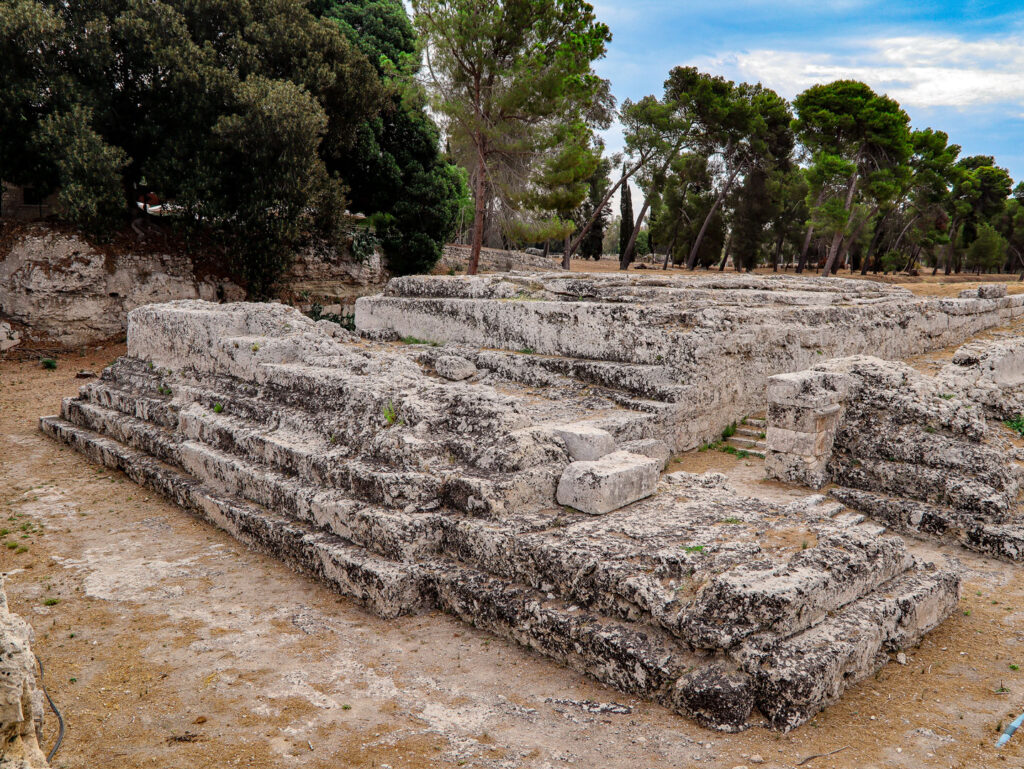
Ara di Ierone II
Another important monument is the Ara di Ierone II, a monumental altar associated with Hieron II, ruler of Syracuse during the Hellenistic period.
Although much of the original structure has disappeared, its surviving foundations reveal its extraordinary scale.
The altar provides another indication of just how important Syracuse was in antiquity and how ambitious its monumental architecture could be.
How Long Do You Need?
Allow around two hours for a comfortable visit to Parco Archeologico della Neapolis.
Travelers with a strong interest in archaeology, history or photography may want to spend longer.
The site covers a substantial outdoor area, so rushing through it can mean missing many of the smaller details between the major monuments.
Best Time to Visit
Spring and autumn are excellent seasons for exploring archaeological sites in Sicily, when temperatures are generally more comfortable for walking outdoors.
During summer, Syracuse can become very hot, particularly around midday. An earlier visit can make exploring the exposed sections of the park much more pleasant.
Bring water, sun protection and comfortable walking shoes.
Some surfaces are uneven, so footwear suitable for walking on stone and archaeological terrain is recommended.
Visiting Neapolis and Ortigia
One of the advantages of visiting Syracuse is that you can experience two very different sides of the city in the same day.
Start with the ancient world at Parco Archeologico della Neapolis, then continue toward Ortigia, Syracuse’s beautiful historic island center.
Ortigia offers narrow streets, Baroque architecture, waterfront views, lively piazzas and restaurants, providing a striking contrast to the ancient ruins of Neapolis.
If your schedule allows, however, dedicating a full day to Syracuse will give you a much more relaxed experience.
Is Parco Archeologico della Neapolis Worth Visiting?
Absolutely.
For travelers interested in ancient Greece and Rome, Parco Archeologico della Neapolis is one of the essential archaeological attractions in Sicily.
The Greek Theatre alone makes the site worth visiting, but the combination of the Ear of Dionysius, ancient quarries, Roman Amphitheatre and other archaeological remains creates a much richer experience.
More importantly, Neapolis helps reveal the extraordinary scale and historical importance of ancient Syracuse.
It is not simply a collection of ruins. It is a landscape where more than two thousand years of Sicilian history remain visible beneath the Mediterranean sun.
Parco Archeologico della Neapolis at a Glance
Location: Syracuse (Siracusa), Sicily, Italy
Main highlights: Greek Theatre, Ear of Dionysius, Latomia del Paradiso, Roman Amphitheatre and Ara di Ierone II
Best for: Archaeology, ancient history, architecture and photography
Recommended visit: Around 2 hours
Combine with: Ortigia and the historic center of Syracuse
What to bring: Comfortable shoes, water and sun protection
Opening hours, ticket prices, accessible areas and visitor conditions may change. Information on Italy Highlights is provided for general travel reference. Please confirm current details directly with the attraction or official local sources before visiting.
Source: LonelyPlanet