


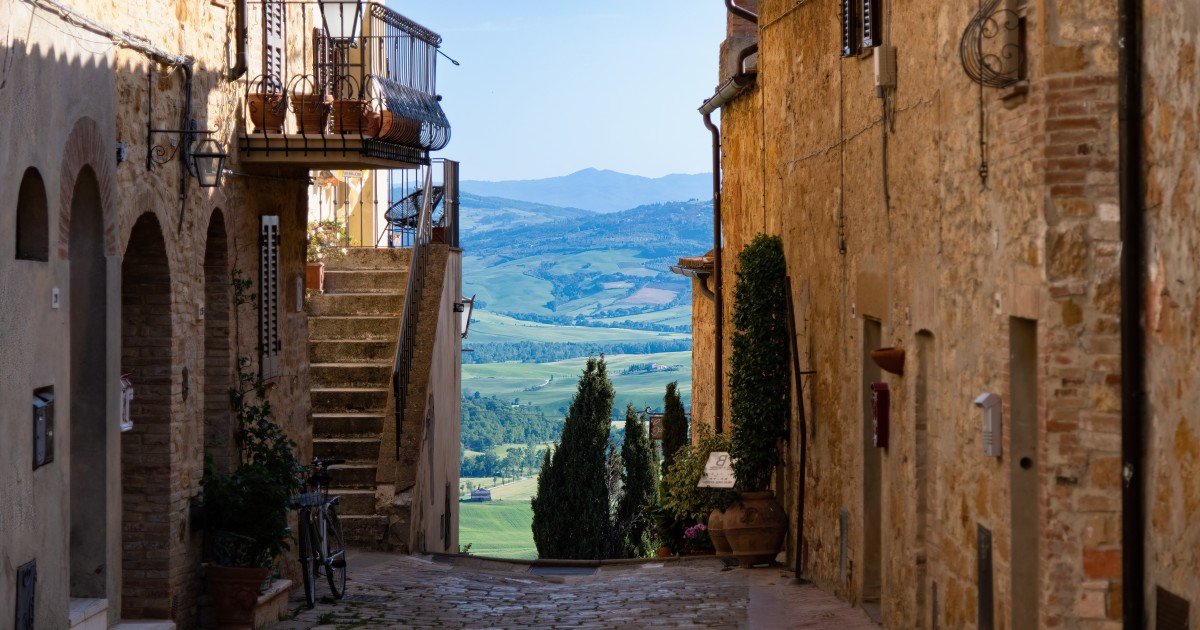

Val d’Orcia in southern Tuscany is often reduced to cypress-lined lanes and postcard views. That is part of the picture, but it is also a working rural area made up of small towns, hamlets and farmland, with the everyday practicalities that come with them.
For anyone considering living in Val d’Orcia, the main things to weigh up are housing, driving, year-round services and how comfortable life feels outside the summer season. The UNESCO-listed landscape is extraordinary, but a move here works best with a clear-eyed plan for transport, work, healthcare and property upkeep.
Where is Val d’Orcia in Tuscany?
Val d’Orcia sits in the Province of Siena, south of Siena city. It stretches across rolling farmland and hill towns between the Crete Senesi, Monte Amiata and the borders of Umbria and Lazio.
It is not one town. The name refers to a wider valley and cultural landscape made up of several comuni, smaller frazioni and countryside properties.
Pienza, San Quirico d’Orcia, Castiglione d’Orcia and Montalcino sit within the core area, while Montepulciano is often grouped into a Val d’Orcia trip because it is close by and shares many practical links with the region.
What living in Val d’Orcia is really like
Life in Val d’Orcia follows the rhythms of a rural area. Summers and autumn weekends are busy, while winter can be quiet. Smaller places may have limited opening hours outside the tourist season, although that also means a calmer pace and stronger sense of local routine.
People tend to use the local comune for administration, village noticeboards for events and recommendations, and nearby towns for services that are not available locally.
The trade-off is straightforward. There is space, fresh air and a close connection to local food and farming, but fewer specialist services, fewer long-term rentals and much greater dependence on a car than in Siena, Florence or larger Tuscan towns.
A car is close to essential for most residents. It is particularly important for countryside homes, smaller frazioni and commutes to larger towns. Public buses connect parts of the area, but services are less frequent than in urban Tuscany and may not fit work or school schedules.
The best Val d’Orcia towns to live in
There is no one best town in Val d’Orcia. The right place depends on budget, work arrangements, need for services and appetite for rural life.
Living in Pienza
Pienza is compact, walkable and closely tied to the public image of Val d’Orcia. Its historic centre has shops, restaurants and cultural activity, while the surrounding countryside is quickly reached by car.
The obvious compromise is demand. Pienza has a small central housing market and a steady stream of visitors, particularly in warmer months. It suits people who want to be within walking distance of daily essentials and do not mind sharing their town with day-trippers.
Property prices in Pienza averaged €2,917 per m² in October 2026, the highest figure among the locations compared. Scarce stock, historic-centre homes and sought-after rural settings can all affect local asking prices.
Living in San Quirico d’Orcia
San Quirico d’Orcia often feels more practical than Pienza for daily life. It has shops, bars, services and road connections that make it a useful base for moving around the valley.
The historic centre has its own character, while the surrounding municipality includes quieter countryside and the spa hamlet of Bagno Vignoni.
Housing varies between the centre, nearby hamlets and rural properties. Renovation projects can seem affordable on paper, but older buildings may need substantial work on roofs, heating, insulation, drainage and utilities.
Living in Castiglione d’Orcia and the Monte Amiata side
Castiglione d’Orcia sits on the Monte Amiata side of the valley and is a sensible choice for people comfortable with a more rural setup. The municipality includes small settlements and countryside homes, with greater variation in elevation, weather and access.
Property prices in Castiglione d’Orcia averaged €988 per m² in October 2026, the lowest among the four areas compared. That does not necessarily mean a cheaper move overall. Houses can need roof repairs, heating upgrades, septic systems, improved insulation or more regular car use.
Living in Montalcino
Montalcino is a hill town with a well-established year-round community, local services and a strong connection to wine production. Brunello di Montalcino has shaped the local economy and brought international visibility, but the town is more than its wine cellars and tasting rooms.
Property prices in Montalcino averaged €1,628 per m² in October 2026. Prices can differ considerably between the historic centre, local frazioni and countryside properties, particularly those with land, outbuildings or tourist potential.
Its raised position brings wide views and a strong sense of place, but also steep streets and parking considerations. It works well for people who want an active small town rather than an isolated country house.
Living in Montepulciano and other nearby bases
Montepulciano is not within the core Val d’Orcia UNESCO area, but it is close enough to be relevant when comparing places to live. It is larger than several Val d’Orcia towns and has a fuller set of shops and services, while still retaining a hill-town layout and rural surroundings.
Property prices in Montepulciano averaged €1,269 per m² in October 2026. That sits below Montalcino and Pienza, but above Castiglione d’Orcia.
Radicofani appeals to people after a smaller and more elevated setting, though it is more remote for errands and commuting. Bagno Vignoni is memorable for its historic thermal-water basin but has limited housing and substantial visitor attention.
Val d’Orcia property prices in October 2026
|
Pienza |
€2,917 per m² |
|
Montalcino |
€1,628 per m² |
|
Montepulciano |
€1,269 per m² |
|
Castiglione d’Orcia |
€988 per m² |
Pienza’s average asking price was close to three times that of Castiglione d’Orcia. The difference shows how varied property markets can be across a relatively small part of southern Tuscany.
For an 80 m² home, the averages translate roughly to:
- Pienza: €233,360
- Montalcino: €130,240
- Montepulciano: €101,520
- Castiglione d’Orcia: €79,040
Val d’Orcia lifestyle: food, wine and local culture
Food and wine in Val d’Orcia are rooted in farming, family businesses and seasonal produce. There are local cheeses, wines, olive oil, cured meats and handmade pasta, but the daily rhythm is usually simpler than the polished version seen in travel brochures.
Pici is the local hand-rolled pasta, often served with a meat sauce, tomato sauce or garlic-based aglione. Pecorino di Pienza comes in different ages and styles, while Brunello di Montalcino and Vino Nobile di Montepulciano reflect the area’s two important wine zones.
Film locations and cultural references in Val d’Orcia
Val d’Orcia has appeared in several international film and television productions because of its roads, fields and hill-town settings. Precise locations are worth checking carefully, as scenes are often filmed across different parts of Siena province and wider Tuscany.
Buying property in Val d’Orcia
Buying in Val d’Orcia needs more preparation than buying a standard flat in a city. Properties may be old, partially renovated, located on rural roads or subject to planning restrictions. The setting can be magnificent, but the paperwork needs to be equally solid.
An independent geometra or architect can assess the building, cadastral records, planning history and renovation scope. A lawyer experienced in Italian property transactions can check ownership, debts, access rights and contractual terms. International buyers should also seek independent tax advice before committing.
Stay in the know about living in Italy as a foreigner—get our weekly newsletter for the latest travel, legal, and lifestyle news.
Source: https://www.idealista.it/