


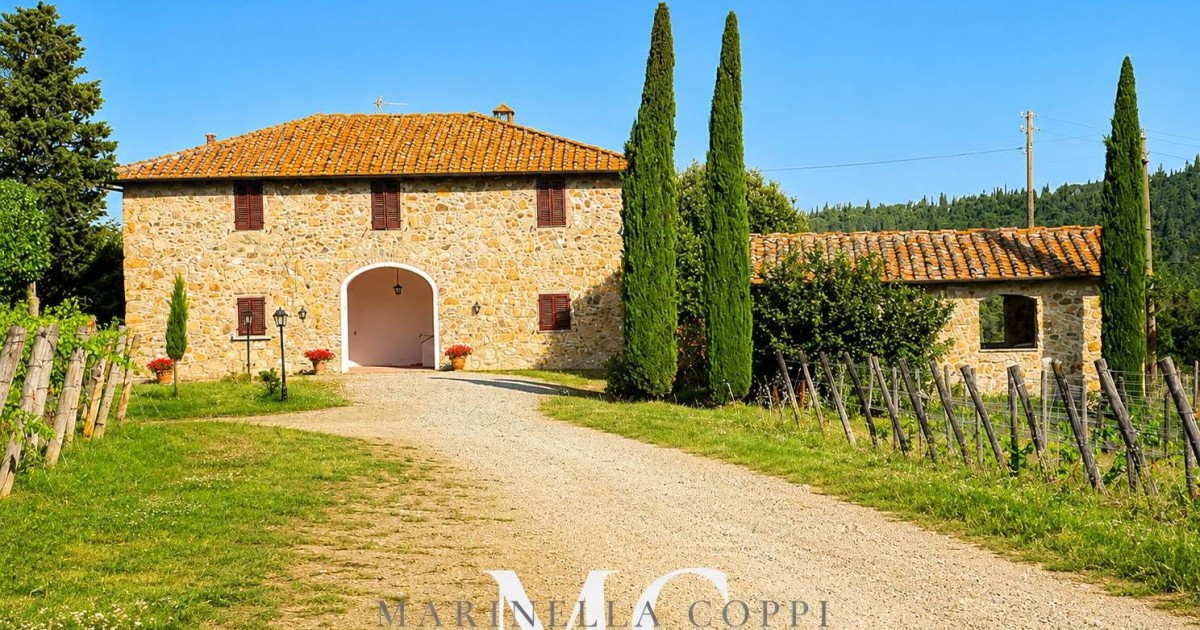

Stone walls, exposed beams, a garden of your own and silence as the soundtrack. For many, it is a lifelong dream, often put off because it seems too expensive or likely to involve a complete renovation.
Yet farmhouses and rustic homes are currently for sale from €43,000, in good condition, in some of Italy’s most appealing areas. Opportunities can be found across Caltanissetta, Frosinone, Calabria, inland Tuscany and the hills of Piedmont.
Farmhouse, rustic home or cascina: what is the difference?
These three terms are often used interchangeably, but they are not exact synonyms. It is worth understanding the distinctions before starting a property search.
-
A farmhouse (casale) is traditionally a rural building with a certain level of character, often built in stone or brick and with agricultural or aristocratic origins.
It usually has generous floor space, may include land and is found in the countryside or close to small historic towns.
-
The term rustic home (rustico) is broader.
It refers to any property with traditional architectural features — raw materials, a solid structure and an unfussy style — which may be a standalone home or part of a larger complex.
-
A cascina, a term more commonly used in northern Italy, is historically the classic agricultural building.
It includes large spaces, internal courtyards, storage areas and converted stables. Cascine are often sold as individual units created within a larger complex.
A farmhouse as an investment: holiday lets and agriturismo
Not everyone buys a rustic home to live in all year round. A growing share of buyers sees these properties as an income-generating investment, focusing on seasonal holiday lets or conversion into an agriturismo — a rural hospitality business linked to farming.
Italy’s rural tourism market is expanding steadily. Agriturismi, holiday homes and “farmhouse retreats” attract domestic and international guests willing to pay significant sums to stay in authentic settings.
A farmhouse in good condition in Umbria or Sicily, suitably furnished and advertised, can produce income that quickly offsets the initial investment.
Anyone planning to turn the property into an agriturismo needs to start a complementary agricultural activity, even on a small scale, comply with regional regulations for rural accommodation and obtain the necessary licences. It is a viable route, and many regions support it through dedicated incentives and grants.
Sticking to short-term lets through online platforms is also a valid strategy, with fewer bureaucratic requirements but the same income potential, particularly in areas with strong tourist appeal.
Common concerns when buying a farmhouse
The most common concern is the distance from everyday services: the idea that an affordable farmhouse must mean complete isolation. In reality, many of these properties are located a few kilometres from villages with supermarkets, GPs and schools. For those with a car, being 15 minutes from the centre of a medium-sized town is not much of a sacrifice. It is standard for people already living on an urban fringe.
There is also the question of mortgages. Obtaining finance for a rustic home is possible, but it depends on its land registry classification.
Properties classified as A/3, A/7 or A/11 — standard homes, villas and typical local dwellings — can be financed without difficulty.
Finally, there are future works to consider. Alterations and extensions are often possible, although they must always comply with local planning and landscape restrictions. Rural properties in areas without protected-status restrictions usually allow substantial works.
Where to find the most affordable prices
The price bracket starting at €43,000 for farmhouses and rustic homes in good condition is spread across Italy in a way that reflects the long-standing dynamics of the country’s rural property market, with several areas standing out.
The greatest concentration of opportunities is in Calabria, Sicily, Molise and Basilicata, where it is easier to find large farmhouses at relatively modest prices.
Central Italy provides an interesting balance between accessible prices and the quality of the surrounding countryside, while the north is more selective. Here are the best opportunities among idealista’s listings.
- Cortona – Eastern Tuscany, with rural homes around the Valdichiana and an established international community.
- Castiglione del Lago – A Lake Trasimeno base in Umbria, close to Tuscany and often more affordable than neighbouring Tuscan locations.
- Lucca – Country properties in the hills and villages surrounding the historic walled city, with Pisa within easy reach.
- Camaiore – A Tuscan option close to the coast, with countryside, small villages and the Apuan Alps nearby.
- Manciano – Southern Tuscany’s Maremma, near Saturnia and suited to buyers looking for quieter rural settings.
- Roccastrada – A more secluded Maremma area with woodland, wide-open countryside and traditional stone homes.
- Ostuni – A popular Puglian choice for homes among olive groves, within reach of the Adriatic coast.
- Montepulciano – Tuscan vineyard country, with traditional farmhouses and hill-town life in the Val d’Orcia area.
- Montespertoli – Florentine countryside with vineyards and village life, around an hour from Florence by car.
- Todi – A central Umbrian hill town, with rural homes in the surrounding valleys and good road links.
- Città della Pieve – A small Umbrian town near the Tuscan border, with traditional properties and access to Lake Trasimeno.
- Scansano – A wine-growing area in the Maremma, with open countryside and a lower-key atmosphere.
- Orvieto – Rural Umbria with useful rail connections towards Rome and Florence, particularly practical for part-time residents.
- Arezzo – The wider Arezzo area offers varied countryside, everyday services and access to eastern Tuscany.
- Volterra – A historic hill town surrounded by rolling countryside, generally quieter than Tuscany’s busiest areas.
- Ceglie Messapica – An inland Puglian town with traditional stone houses, trulli and masserie in the Valle d’Itria.
- Greve in Chianti – A well-regarded Chianti location, although rural homes here tend to command higher prices.
- Perugia – A useful service hub for exploring the Umbrian countryside, with an international university and airport nearby.
- Magliano in Toscana – A peaceful Maremma location with vineyards, rural homes and reasonable access to the coast.
- Capalbio – Southern Tuscany near the coast and Monte Argentario, where desirable countryside homes can be more expensive.
- Città di Castello – Northern Umbria’s Upper Tiber Valley, with a working-town feel, good facilities and rural surroundings.
- Castellina in Chianti – A Chianti address with vineyards and classic stone farmhouses, typically towards the higher end of the market.
- Martina Franca – A strong base in Puglia’s Valle d’Itria for trulli, masserie and country homes.
- Gubbio – A historic Umbrian town surrounded by hills, offering more space and a quieter countryside setting.
Source: https://www.idealista.it/