


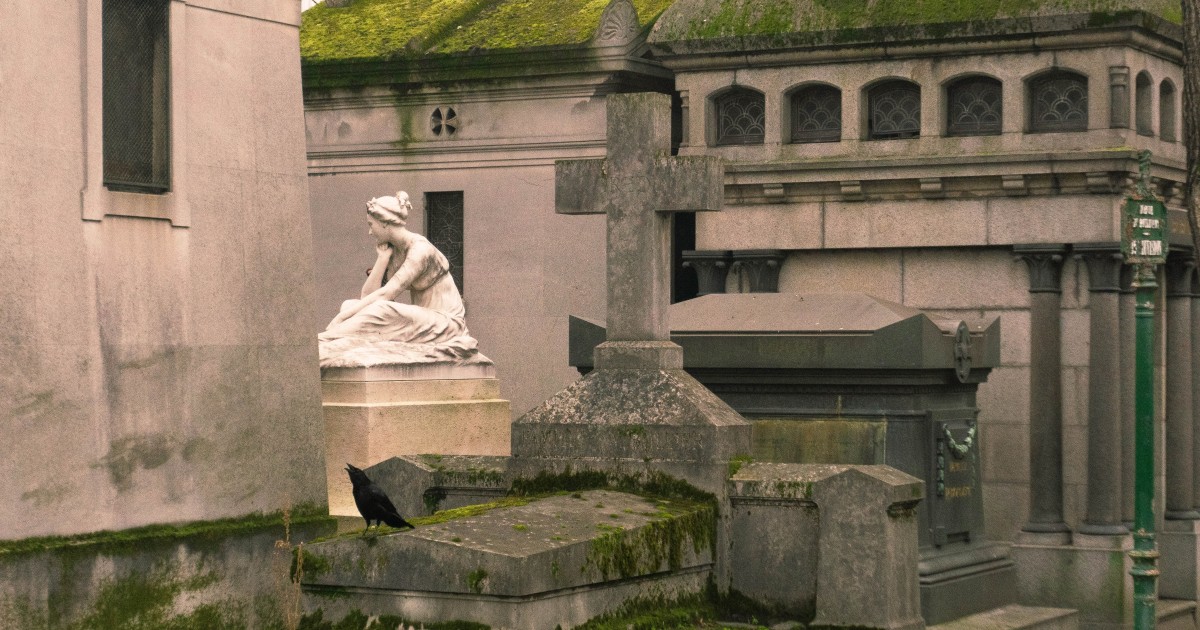

Every year, between late October and early November, the avenues of Italian cemeteries fill with flowers, pots of chrysanthemums and small lights. Yet the day dedicated to the dead falls on 2 November, while queues at cemetery gates almost always form the day before.
So, why do people visit cemeteries on 1 November? The date is All Saints’ Day, a religious feast that is also a public holiday in Italy. Understanding how these two closely connected dates came together in one popular custom helps explain one of the country’s most widely observed traditions.
When do people visit cemeteries: 1 or 2 November?
The most straightforward reason cemeteries are visited on 1 November is practical: it is a public holiday, while 2 November is not. People who work or study therefore have the whole day to go to the cemetery, often outside their town or city, and meet up with relatives who live far away.
Traditionally, however, the visit to the deceased belongs to the Commemoration of All the Faithful Departed on 2 November, also called the “Day of the Dead”, which the Church observes the day after All Saints’ Day.
The two observances were conceived as a single journey, moving from the glory of the saints to the remembrance of those who are no longer here. In popular understanding, the two days have therefore overlapped, with 1 November becoming the usual day for cemetery visits.
The 1 and 2 November holidays in Italy
1 November is a national holiday, recognised under Article 2 of Law No. 260 of 27 May 1949, which lists the public holidays of the Italian Republic. Alongside many other national dates, All Saints’ Day is one of the occasions when schools and offices are closed.
The Commemoration of All the Faithful Departed, by contrast, is a deeply observed religious and popular occasion but not a civil holiday. On 2 November, work and study continue as usual, apart from any ponte — a long weekend created by bridging a public holiday — granted by individual employers or educational institutions. Anyone visiting a cemetery that day therefore needs to fit it around working hours.
The origins of All Saints’ Day: Rome and 1 November
The Feast of All Saints has roots in the early centuries of Christianity, when different communities commemorated martyrs on particular days. A key moment is associated with Rome: Pope Boniface IV converted the Pantheon into a Christian place of worship, dedicating it to the Virgin Mary and all martyrs.
The move of the feast to 1 November is attributed to Pope Gregory IV, who around 835 asked Louis the Pious, King of the Franks, to make it a holy day of obligation throughout his kingdom. One theory links the autumn date with pagan festivals held at this time of year, including the Celtic festival of Samhain, although this is a widespread theory rather than a confirmed fact.
The feast later became obligatory throughout Christendom. Since then, 1 November has remained in the calendar as a day dedicated to all saints, both known and unknown.
2 November and the idea of Odilo of Cluny
The choice of 2 November as a day for the dead began in the Benedictine monastic world. In 998, Odilo, the fifth Abbot of Cluny, in Burgundy, established that monasteries within his congregation would hold a commemoration for the dead of every time and place.
Placing it on the day after All Saints’ Day was symbolic: the feast of the blessed was followed by remembrance of those still awaiting purification. Odilo’s initiative proved hugely successful and soon spread beyond Cluny.
Stay in the know about living in Italy as a foreigner—get our weekly newsletter for the latest travel, legal, and lifestyle news.
Source: https://www.idealista.it/